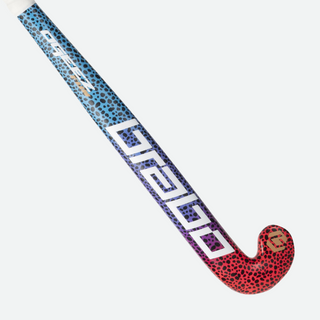
What is the curve of a hockey stick

Table of contents
What is the curve of a hockey stick for?
FIND OUT WHY IT IS SO IMPORTANT
READING TIME: 6 min.
Every field hockey player who has tried different sticks knows that they don't all feel the same. That difference is no coincidence: the stick curve, known as the bow, is one of the most determining factors in on-field performance.
The stick's curvature is not an aesthetic detail. It is a technical element that directly influences ball control, the ease of lifting the ball, the execution of technical skills and the style of play you can develop.
What exactly is the curve of a hockey stick?
The hockey stick curve (bow) refers to the curvature of the stick's profile along its longitudinal axis, especially in the lower area near the head.
This curvature is regulated and defined mainly by two parameters:
Bow height: measured in millimetres, normally up to 24–25 mm according to regulations
Bow position: distance from the head where the maximum point of curvature is located
Unlike other sports, in field hockey this geometry has a direct impact on technique, especially in actions such as oriented control, aerial passes or drag flicks.
Technical components of the stick curve
The curvature of the hockey stick is defined by several key elements:
- Bow height (mm): determines how pronounced the curvature is
- Bow position: defines whether it is more centred or closer to the head
- Length of the curved zone: extent of the curvature along the stick
These factors, combined, influence the behaviour of the stick during play.
Choose the perfect stick for your matches
Main functions of the curve in a hockey stick
Ball control
A well-designed curve improves the feel of contact with the ball and makes it easier to guide, especially in quick receptions or under pressure.
The bow position allows the stick to better adapt to the angle at which the ball arrives, offering greater stability at first touch.
Ease of lifting the ball
One of the most important functions of the curve is to make it easier to lift the ball.
Sticks with a low bow or extra low bow (super low bow) make it easier to execute:
- Scoops
- Aerial passes
- 3D skills
- Drag flicks at penalty corners
Influence on hitting
The curve does not generate more power by itself — this depends mainly on the material (carbon percentage) and technique — but it does influence:
- The exit angle of the ball
- The ease of executing elevated hits
- Precision in specific technical actions
Versatility in play
Depending on the bow position, the stick can better adapt to different styles of play:
- Combinative play and control
- Offensive play and technical skills
- Specialisation in specific actions such as the drag flick
Types of curve according to your style of play
Mid Bow (mid curve – control)
The curve is located in the central zone of the stick.
Advantages:
- Greater control in flat hitting
- Precision in short and medium passes
- Ideal for build-up play players
Recommended for:
- Midfielders
- Players in development
Low Bow (low curve – technique)
The curvature is located closer to the head.
Advantages:
- Makes lifting the ball easier
- Improves technical skills (3D skills)
- More versatile in attack
Recommended for:
- Offensive players
- Wide players with attacking intent
Super Low Bow / Pro Bow (very low curve – specialist)
The curve is very close to the head of the stick.
Advantages:
- Maximum performance in drag flick
- Quick elevation of the ball
- Ideal for advanced skills
Recommended for:
- Forwards
- Penalty corner specialists
How to choose the ideal curve for your stick
According to your position on the pitch
- Defenders: mid bow or low bow for control and clearances
- Midfielders: mid bow for balance and distribution
- Forwards: low bow or extra low bow for offensive actions
According to your technical level
- Beginners: mid bow (more control and ease of learning)
- Intermediate: low bow (more technical resources)
- Advanced: extra low bow (specialisation)
Choosing too aggressive a curve without the right technique can make control and hitting more difficult.
Physical factors and playing style
Your style of play also influences your choice:
- Technical players → benefit more from low curves
- Control players → prefer mid curves
- Power players → do not depend as much on the bow
Common mistakes when choosing the stick curve
- Copying professional players: The fact that a professional uses a certain type of curve does not mean it is right for you.
- Choosing the most extreme curve: More curve is not better. It can cause:
- Loss of control in flat hitting
- Difficulty on the backhand
- Less versatility
- Constantly changing curve: Adaptation takes time. Changing frequently prevents you from developing technical muscle memory.
- Not trying different models: Each brand interprets the bow differently, even with similar specifications.
Maintenance and care of the stick curve
Storage
- Avoid pressure on the blade
- Do not leave weight resting on the stick
- Keep the stick in a stickbag when not in use
Cleaning
Keeping the blade clean improves contact with the ball and accuracy.
Inspection
The curve does not change with normal use. If you notice deformations, it may indicate structural damage to the stick.
The impact of the curve on performance
The stick curve directly influences how you execute technical actions on the pitch. It is not a collective tactical element, but it does condition individual performance and the player's role.
Choosing the right bow allows you to adapt the stick to your style of play and improve efficiency in every action.
Conclusion
The hockey stick curve (bow) is a key element that affects control, technique and the style of play you can develop.
It is not about choosing the most pronounced curve, but the most suitable one for your level, position and style. When you find the right curve, the stick adapts better to your movements and allows you to play with greater precision and confidence.
Unlock your discount
Subscribe and get your exclusive discount code.
Continue reading


Featured products
Hockey Stick Junior Adidas Estro 20 LE
€67,50 View product →
Adidas Youngstar 10 Junior Hockey Stick
€36,00 View product →
Adidas Youngstar 10 Junior Hockey Stick
€36,00 View product →
Adidas Youngstar 10 Junior Hockey Stick
€36,00 View product →
Hockey Stick Junior Princess Woodcore Leopard
€39,99 View product →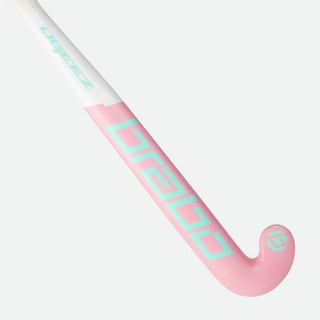
Hockey Stick Junior Brabo O'Geez
€35,99 View product →
Hockey Stick Junior Princess Woodcore
€39,99 View product →
Adidas Youngstar 10 Junior Hockey Stick
€36,00 View product →
Hockey Stick Junior Princess Woodcore Gradient
€39,99 View product →
Hockey Stick Junior Brabo O'Geez
€35,99 View product →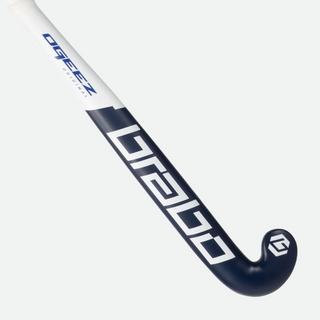
Hockey Stick Junior Brabo O'Geez
€35,99 View product →