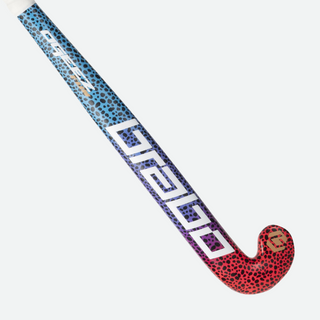
Hockey material initiation
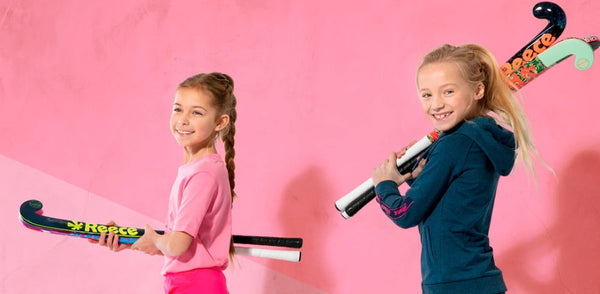
Table of contents
Hockey starter equipment
We thought it would be helpful to explain the basic equipment your son/daughter needs to start playing.Reading time: 5 min.
When starting out in hockey, you discover a wide range of sticks, footwear, protective gear, etc., and it can sometimes be difficult to know what your child actually needs.
To make this easier for parents, we thought it would be helpful to explain the basic equipment their son/daughter needs to start playing.
The key is to choose the right equipment for each stage and not overspend when they are young, as they are still growing.
Throughout this guide, we refer to the equipment needed for field hockey players, not goalkeepers or indoor hockey.
Essential equipment
Hockey Stick / Field Hockey Stick
It is the most characteristic element of our sport and the most essential when starting out. It can be made of wood, fibreglass or carbon.
Size is important — for children, we use what we call the belly button method, which you can find explained in our hockey stick guide. Wooden sticks are the simplest option; for very young children (up to 5 years old), we recommend this type of material for its price and quality. As they get a bit older, you can choose wood or fibre depending on how ready your child seems. If your child really loves the sport and practises constantly, we recommend a carbon fibre stick, as it will allow them to hit harder and has far less wear than wood, as well as being more resistant to impacts. On water-based artificial pitches, fibre is much more durable. You can see the junior hockey stick collection here.
Hockey Shinguards
They are worn on the legs, covering from the ankle to the knee. They must allow for easy crouching and movement. They protect against stick hits, ball impacts and contact with opponents. In this sport, legs take a lot of hits, so shinguards are truly essential from the very first day of playing hockey. We recommend the ones our customers ask for most, the Adidas White/Black Shinguards.
Mouthguard
It is a protector for the teeth. It is often thought to be unnecessary, but our experience tells us that it absolutely is!
It can feel uncomfortable for young players, but they need to get used to wearing it. There are different types of materials, brands and moulds… The mouthguards we currently recommend most are from the SISU brand. First, they have been used across a wide range of sports (hockey, basketball, rugby…) and activities that require protecting this area of the face. Second, they are easy to mould at home and adjust to each age group. We explain how to do this in our guide to correctly fitting a mouthguard. And third, because the experience and feedback from our customers tells us it is the right choice. Here you can see the mouthguard collection we have for you.
What do we need as secondary equipment?
Hockey Shoes
There are shoes designed exclusively for field hockey. Unlike other sports, they have specific studs for artificial turf, are reinforced so that ball impact does not hurt, and are designed to be more resistant to water and the demands placed on the foot when playing hockey.
We consider this secondary equipment, as it is not essential in the first few days, but once your child decides to continue with the sport, it is highly recommended to get shoes specific to the sport.
Sport Bag, Stickbag and Backpack
You will rarely see a stick without a bag on the street. On one hand, we recommend that once the stick leaves the pitch, it is kept protected from knocks and scratches to avoid damage that could shorten its lifespan. On the other hand, it is a matter of practicality: stickbags are designed to carry the stick while allowing the child to bring everything they need comfortably. They are very practical and come in many different price ranges depending on size, pockets and brands… Here you can see our stickbag selection.
We also have the backpack option. The vast majority of models are designed for practising hockey after school. They allow children to carry their laptop or books, as well as their stick on the side or threaded through the inside of the backpack, with the part that sticks out at the bottom protected by an extension of the bag itself. A great option for those who play hockey at school as an after-school activity.
Field Hockey Glove
The glove is only worn on the left hand. It protects against knocks and scrapes from the turf as well as ball impacts. It is worn only on this hand, as it is the one that grips the stick without letting go. The right hand, on the other hand, can be released without any problem, as the left hand is the stronger one. The glove must fit the hand well, protecting the outer area while allowing feel and a correct grip on the stick. It is not essential for young children as they do not crouch low enough to scrape against the turf, but they can still receive knocks from teammates or ball impacts. There is a wide variety of colours and brands — here you can see a selection.
We hope this short guide proves useful for parents who are new to hockey. Little by little, you will surely become familiar with everything and end up being real experts.
Whenever you have questions, we are here to help with anything you need!
Frequently asked questions
¿Qué material necesita mi hijo para empezar a jugar a hockey hierba?
¿Cómo sé qué talla de stick le corresponde?
¿Es imprescindible el protector bucal?
¿Merece la pena comprar zapatillas específicas de hockey?
Unlock your discount
Subscribe and get your exclusive discount code.
Continue reading


Featured products
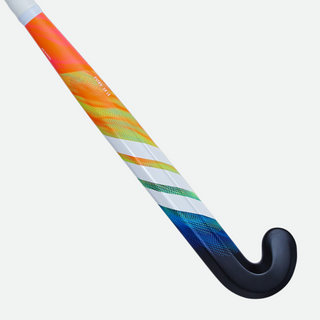
Hockey Stick Junior Adidas Estro 20 LE
€67,50 View product →
Adidas Youngstar 10 Junior Hockey Stick
€36,00 View product →
Adidas Youngstar 10 Junior Hockey Stick
€36,00 View product →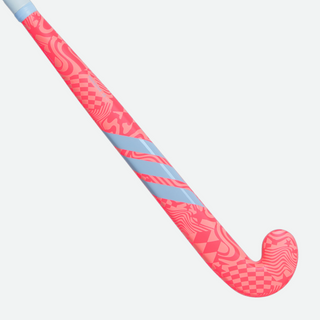
Adidas Youngstar 10 Junior Hockey Stick
€36,00 View product →
Hockey Stick Junior Princess Woodcore Leopard
€39,99 View product →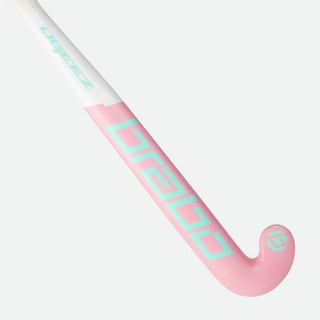
Hockey Stick Junior Brabo O'Geez
€35,99 View product →
Hockey Stick Junior Princess Woodcore
€39,99 View product →
Adidas Youngstar 10 Junior Hockey Stick
€36,00 View product →
Hockey Stick Junior Princess Woodcore Gradient
€39,99 View product →
Hockey Stick Junior Brabo O'Geez
€35,99 View product →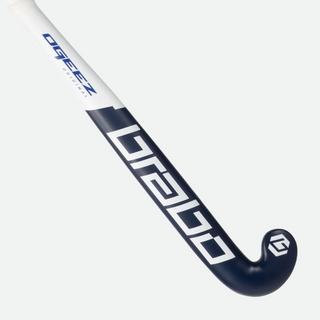
Hockey Stick Junior Brabo O'Geez
€35,99 View product →