How to motivate my child if they don’t like their coach or team

Table of contents
It is not always easy to change teams or train with a new coach.
READING TIME: 4 min.
It is becoming increasingly common to witness regrettable scenes showing inappropriate behaviour by parents towards referees, coaches and even players from opposing teams. These are parents and mothers who have not only completely forgotten what their real role is — to cheer from the stands — but who also greatly harm their child's efforts and those of their teammates.
In general terms, it is estimated that approximately 75% of boys and girls who play sport end up quitting between the ages of 12 and 13. There are many reasons: some quit due to the pressure from their own parents, but the majority give up because they start to feel that the level of demand is becoming too high and it no longer seems as fun as it used to be.
At such young ages, the practice of sport should be, above all else, an enjoyable activity. If the child is not having fun, they will lose all interest. And we may find that, due to a change of coach, a change of team following a promotion to a higher age group, or simply through the thousand experiences a child can go through, the activity that used to satisfy our child so much no longer does. And our role as parents is to discover how to motivate them.
5 basic recommendations for finding motivation
We are aware of the importance of our children practising sport. For various reasons: for the health benefits and the physical and mental development it brings, because it is a fantastic social tool, because if the habit is formed it will be easier for them to continue playing sport when they are older, etc. That is why it is important that, as soon as we detect the first signs of demotivation in our child (reluctance to go to training or matches, excuses, lack of commitment, etc.), we act.
Whatever the underlying problem our child has with the sport they play, we can follow this short 5-step guide:
1. Talk to our child
The goal is to find out what their concern is: the coach, the team, the sport itself…
2. Try to redirect them
Redirect them by working with the typical motivations for their age. We need to find out what their reasons are for playing that sport, bearing in mind that, depending on the age of our child, the basic motivations change:
- From 8 to 11 years old, motivations tend to be oriented towards improvement and social approval.
- From 11 to 13 years old, motivation is mainly oriented towards competence.
- From 13 to 17 years old, motivation is oriented towards competence and personal improvement.
3. Help them define and set a periodic goal
This can be at a training session or in a match. It will help them focus on a specific task and on their subsequent evaluation. We should bear in mind that, at these ages, it is also important to focus on personal improvement goals. We can set goals such as beating a personal best at training, for example.
4. Teach them to appreciate
Teach them to appreciate every effort made, every goal achieved. This way your child will gradually see and enjoy their development and improvement, fostering their motivation and enthusiasm.
5. Never put pressure on them
That is the coach's job. Your role as a father or mother is to support them, understand them and appreciate them. Everything else is the coach's responsibility. This will help your child enjoy the sport, the team and your involvement much more.
Children's sports motivation
As a general rule, boys and girls are not good at managing emotions and it is especially important to teach them to do so. It is essential that they learn to identify, manage and transform them into positive emotions. In this case, it is when the role of the coach is very important, as they are the one who will deal most directly with the situations that will trigger these emotions. The most important ones to work on are:
- Shame. A very common emotion that can end up blocking the child and generating stress and discomfort. One way to work on it is by reducing the pressure on the focus of attention or on its importance (both in success and failure in their performance), by reducing the reaction shown by those around them (the coach, the whole team and, of course, the parents).
- Fear. This can be fear of repercussions, of not succeeding, of disappointing others, etc. It can lead to blocking, avoidance, withdrawal or mistrust. The value attributed to making mistakes is particularly relevant. Children need to be taught to accept mistakes as something normal, without it representing a great responsibility if they make one. They should learn it as a natural part of the learning and development process. And, above all, they should understand that it is better to make mistakes than not to try, so that the fear of error gives way to the desire to improve.
- Anger. Not only does it cause a loss of concentration, it also causes the goal to be lost sight of. Therefore, it is important to teach children to manage anger. Conflict resolution techniques, dissociated observation of the situation and taking perceptual positions are very useful.
To sum up, the key points are:
- Empathise with the child.
- Never dismiss what they feel.
- Always stay calm.
- And give them time for reflection without ever showing anxiety.
We hope these tips are useful and remember that, most importantly above all else, what matters is that you enjoy sport with your children.
Unlock your discount
Subscribe and get your exclusive discount code.
Continue reading


Featured products
Hockey Stick Junior Adidas Estro 20 LE
€67,50 View product →
Adidas Youngstar 10 Junior Hockey Stick
€36,00 View product →
Adidas Youngstar 10 Junior Hockey Stick
€36,00 View product →
Adidas Youngstar 10 Junior Hockey Stick
€36,00 View product →
Hockey Stick Junior Princess Woodcore Leopard
€39,99 View product →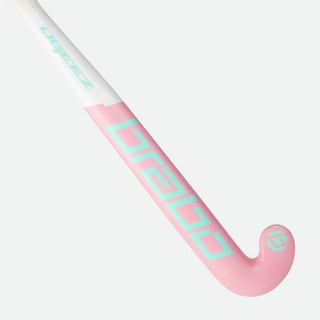
Hockey Stick Junior Brabo O'Geez
€35,99 View product →
Hockey Stick Junior Princess Woodcore
€39,99 View product →
Adidas Youngstar 10 Junior Hockey Stick
€36,00 View product →
Hockey Stick Junior Princess Woodcore Gradient
€39,99 View product →
Hockey Stick Junior Brabo O'Geez
€35,99 View product →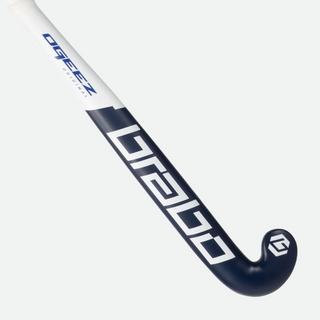
Hockey Stick Junior Brabo O'Geez
€35,99 View product →